The Trust System
Bitcointalk's trust system is its most important defensive layer. It's also its most misunderstood. Most newcomers think it works like Reddit upvotes. It doesn't.
The three kinds of feedback
When someone leaves you trust feedback, it comes in three flavors:
- Positive (green) — "I had a good experience with this user."
- Neutral (grey) — "I have something to note about this user (positive, negative, or informational) but it's not strong enough to be positive/negative."
- Negative (red) — "I had a bad experience or have strong evidence this user is unsafe."
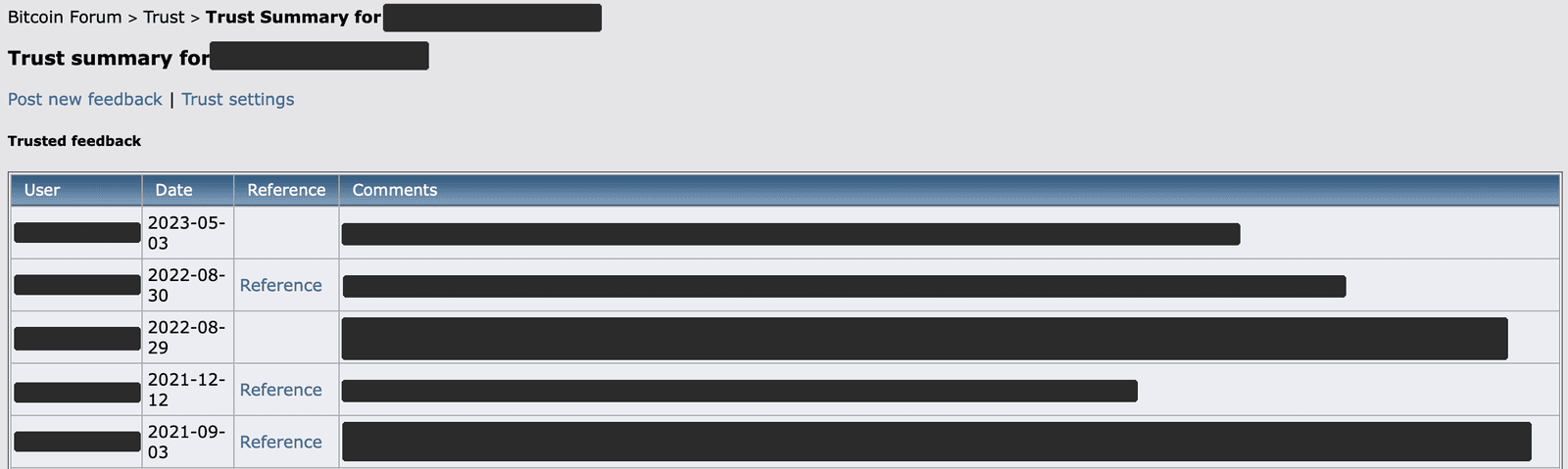
What a real trust page looks like: each trusted feedback entry lists who left it, the date, an optional reference link, and a comment — read the entries, not just the score.
Bitcointalk screenshot · The operator's name, raters' usernames and all comment text are solid bars; the page URL is withheld because it contains the operator's user ID.
Every feedback should include:
- A reference (link to thread, screenshot, or transaction)
- A specific reason
Feedback without evidence gets challenged publicly — though only its author can actually edit or delete it.
How it appears
Your default view summarises feedback from people in your default trust list (DT) and the people they trust. Feedback from outside that web is not hidden — it is still on the profile and still readable — it simply does not count toward the trusted summary.
Next to usernames the forum compresses that summary into a short line such as Trust: 7: -1 / +9 — an overall score of 7, one trusted member leaving negative feedback, nine leaving positive.
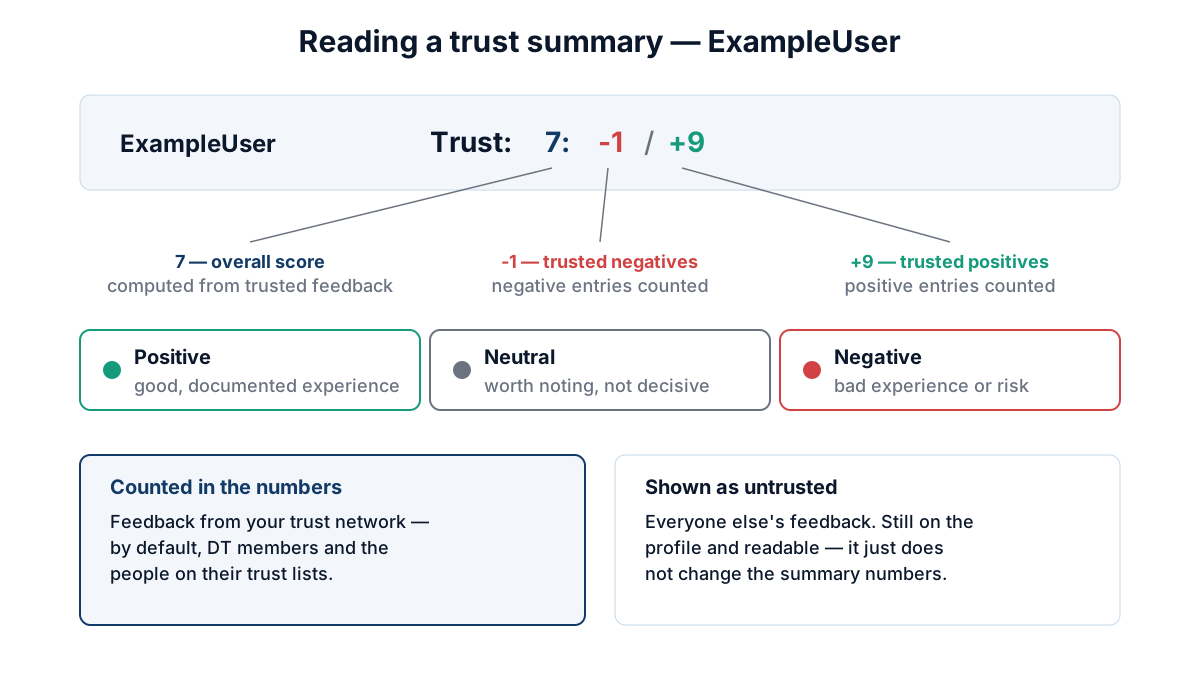
The three numbers in a trust line are the overall score and the counts of trusted negative and positive entries; feedback from outside your trust network shows as untrusted and changes none of them.
Academy original
This means:
- A DT user's negative feedback on you appears in the trusted summary for most viewers, because most people browse on the default list
- A random newbie's negative feedback on you is shown as untrusted rather than trusted — readable, but not counted in the trusted summary
- The system is designed so trust signal compounds through known-good accounts
What red trust does to you
A documented red trust from a DT member:
- Shows on your profile to most viewers
- Often gets corroborated by other DT members reviewing the case
- Leads most campaign managers, service buyers and counterparties to decline — it does not block you from posting or trading, but few people will want to
- Cannot be removed by complaint — only by resolving the underlying issue
What positive trust earns you
Positive trust from active DT users signals safety to other DT users. There is no count that flips you to "trusted" — people read the feedback itself, so a few detailed, verifiable entries are worth more than many vague ones.
It compounds slowly. There's no shortcut.
Your trust list
Your "Trust list" is who you trust. By default, you trust DT. You can:
- Add specific users to your trust (positive)
- Add specific users to your distrust (negative — their feedback won't show to people who use your list)
- Customize what feedback you see when reading other profiles
For newcomers, leave it on default. Curating a trust list is a long-game activity.
How to leave good trust feedback
Do
- Link the thread or transaction the feedback is about
- State the specific behavior (e.g. 'paid promptly, delivered as agreed')
- Wait at least one full trade cycle before leaving feedback
- Stay factual — even negative feedback should describe what happened, not editorialize
Don't
- Leave vague feedback ('seems sketchy', 'I dont like this guy')
- Leave reciprocal trust just because someone trusted you
- Leave trust feedback in retaliation
- Use trust as a punishment for personal disagreements