Mining + Consensus
Bitcoin transactions get into the ledger because miners add them to blocks, and the network agrees that the valid chain with the most accumulated proof-of-work is the truth. That is usually the longest chain, but it is work that decides, not block count. This process is called Proof-of-Work, and it's the most-tested consensus mechanism in computing.
What miners actually do
Miners run specialized hardware (ASICs) that perform trillions of hash calculations per second, trying to find a number (the "nonce") that, when combined with the candidate block's contents, produces a block-header hash that is not above the current difficulty target. In practice every valid block hash is far below it — the target is a ceiling, and the odds of landing exactly on it are negligible.
When one of them finds it:
- They broadcast the block
- Other nodes verify every transaction in it
- Valid blocks get extended; invalid blocks get rejected
- The miner receives the block reward (newly issued BTC + transaction fees)
Difficulty adjustment
Roughly every 2 weeks (every 2016 blocks), the network recalibrates difficulty so that blocks continue arriving every ~10 minutes on average. If more hash power joins, difficulty rises. If hash power leaves, difficulty drops.
This auto-tuning is why Bitcoin keeps a steady ~10-minute block time regardless of how much mining capacity exists globally.
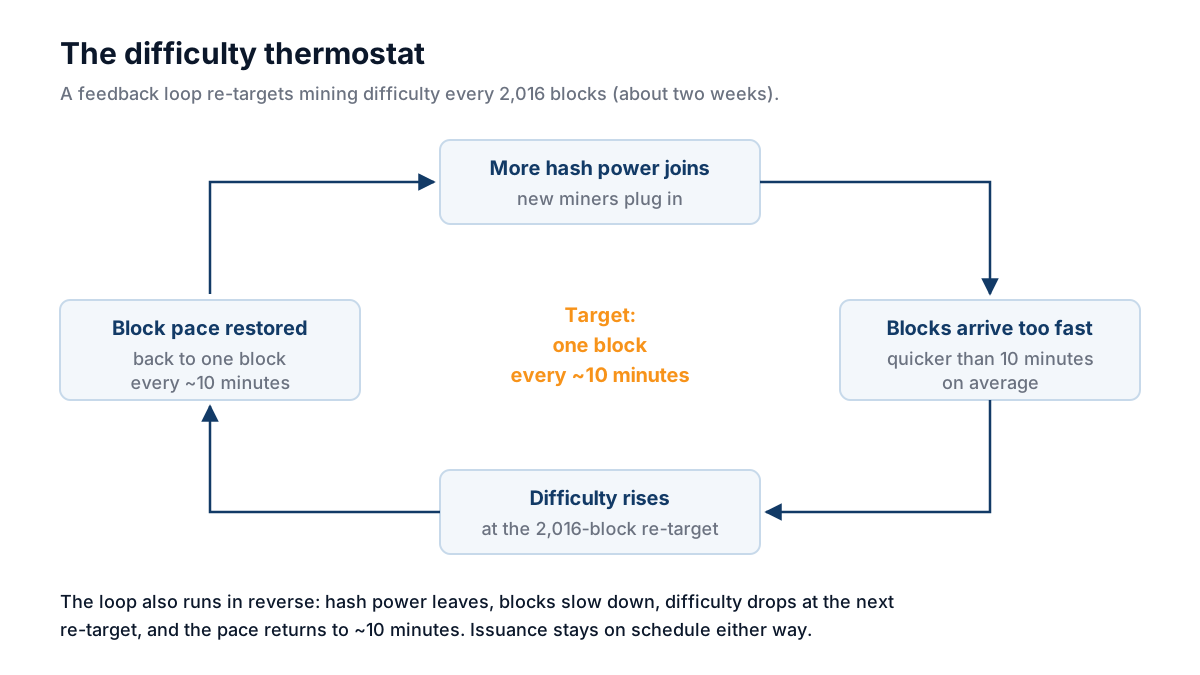
Difficulty self-adjusts every 2,016 blocks so blocks keep arriving roughly every 10 minutes no matter how much mining power exists.
Academy original
Why Proof-of-Work matters
PoW makes rewriting history expensive. To replace a confirmed block, an attacker would need more hash power than the rest of the network combined — and they'd be racing against everyone else, who keep extending the honest chain.
This is the security budget. It's the dollar cost of attacking Bitcoin per unit time.
Block reward + halvings
Every block currently rewards the miner with 3.125 BTC (post-2024 halving) plus all the transaction fees in the block.
The subsidy halves every 210,000 blocks (~4 years):
- 2009: 50 BTC
- 2012: 25 BTC
- 2016: 12.5 BTC
- 2020: 6.25 BTC
- 2024: 3.125 BTC
- 2028: 1.5625 BTC
- … all the way to zero around 2140
After 2140, miners are paid only by transaction fees.
Who mines
Major mining operations are concentrated in regions with cheap energy: US (Texas), Russia, Kazakhstan, Iran, Paraguay. Hash power moves freely as energy prices shift.
Individual mining with consumer hardware is no longer profitable. Mining is now an industrial activity.
Consensus rules
Nodes — not miners — enforce the consensus rules. If miners produced an invalid block (e.g. paying themselves 100 BTC instead of the subsidy), nodes would reject it. This is why running your own node matters: you don't have to trust anyone to confirm the rules are being followed. The rules themselves are openly documented in the Bitcoin developer guide, so nobody has to take anyone's word for what they are.
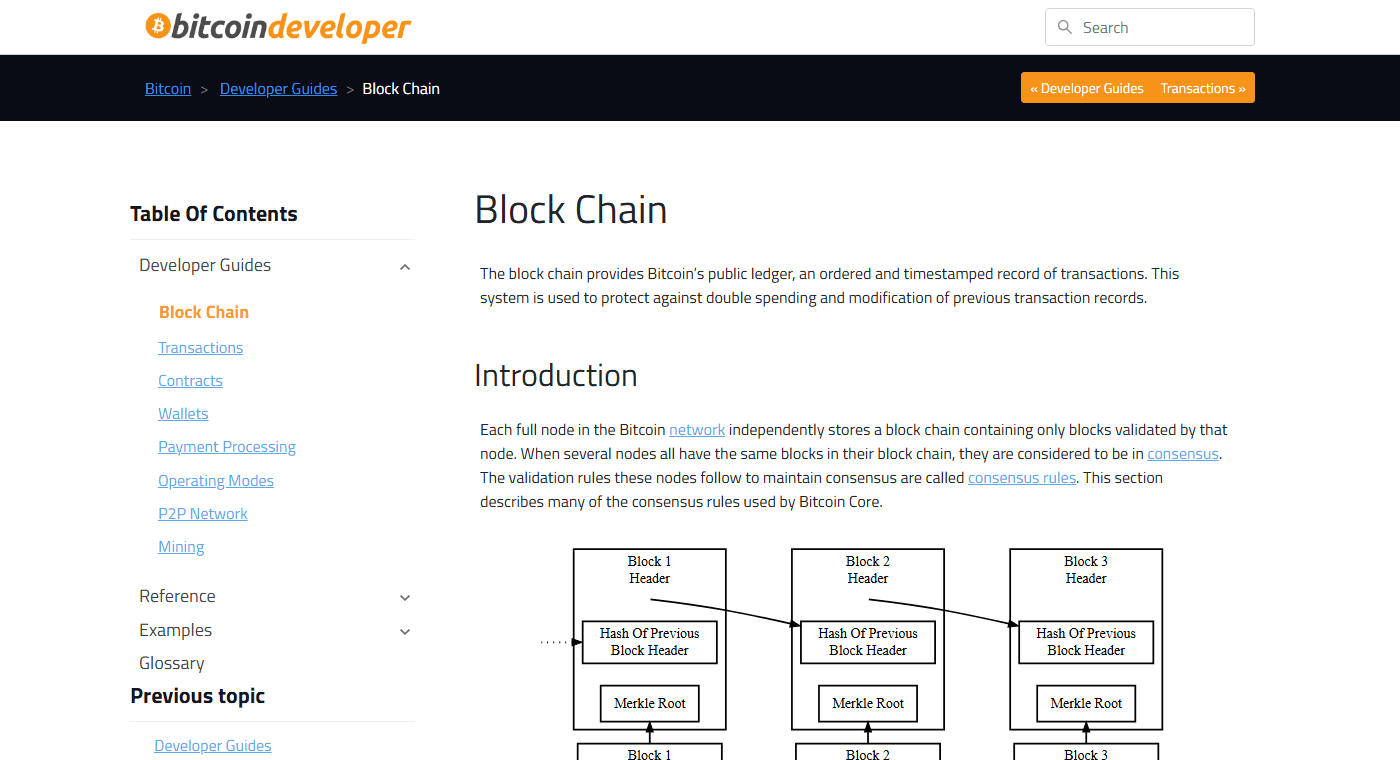
The consensus rules nodes enforce are openly documented — anyone can read the developer guide instead of trusting second-hand descriptions.
source · accessed 2026-09-05