What is Bitcoin?
Bitcoin is a money system that nobody runs. There's no CEO, no central bank, no founding company you can subpoena. It works because thousands of independent computers agree on a shared, append-only ledger of who owns what.
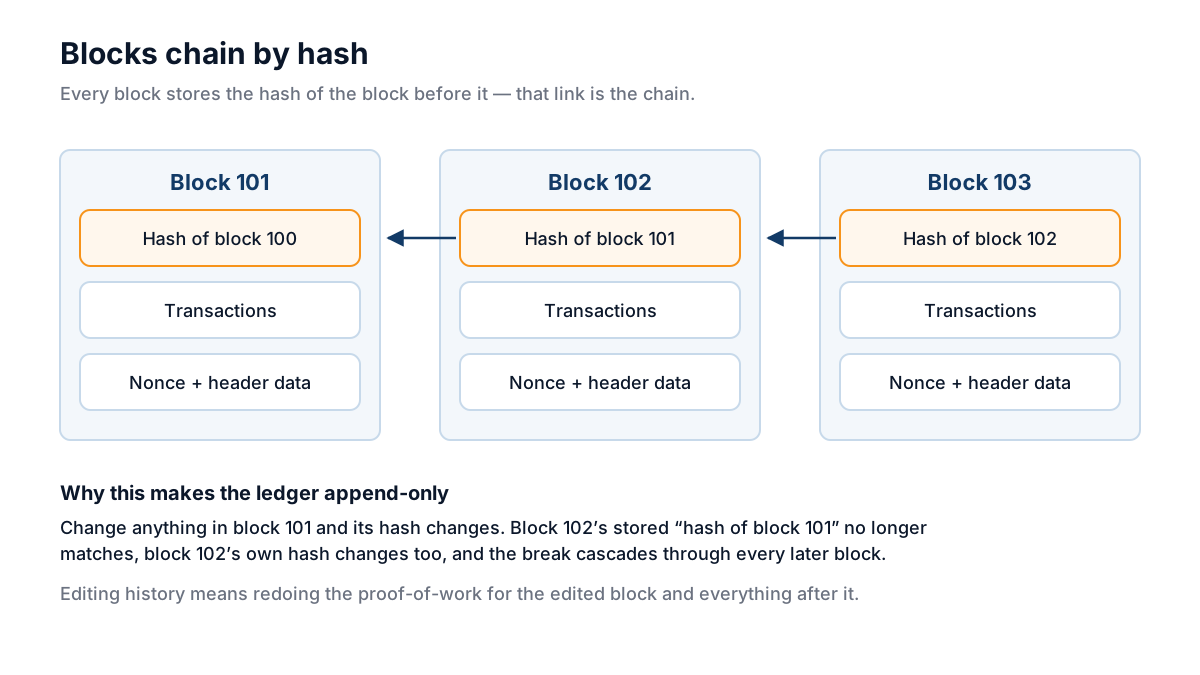
Each block commits to the previous block's hash, so editing history breaks — and forces re-mining — every block after the edit.
Academy original
The three layers
Bitcoin the network. Thousands of nodes worldwide running the same software, validating transactions and blocks.
Bitcoin the protocol. The open-source rules that those nodes enforce. Anyone can run a node, fork the rules, or audit the code.
Bitcoin the asset. A scarce digital unit you can hold and transfer. Hard-capped at 21 million.
Why it matters
For most of history, money has been issued and controlled by states or institutions. Bitcoin is the first credibly neutral digital money — no party can inflate it, freeze it, or rewrite history.
That neutrality is the entire point. Other crypto projects sacrifice it for performance, governance, or features. Bitcoin doesn't.
What it's good at
- Transferring value across borders without permission
- Holding savings outside any single jurisdiction
- Settling large amounts directly between parties (on-chain)
- Resisting censorship and seizure when held in self-custody
What it's not good at (and shouldn't try to be)
- Tiny everyday payments (use Lightning or other layers for that)
- Replacing your local currency for groceries
- Generating "yield" without taking custody risk
- Doing 10,000 transactions per second
The base layer is intentionally slow and conservative so the consensus rules don't get gamed.
Who built it
Bitcoin's whitepaper was published in October 2008 by Satoshi Nakamoto, a pseudonym. The first block was mined in January 2009. Satoshi disappeared in 2011 after handing maintenance to others. The protocol has been maintained by an open community of developers since.
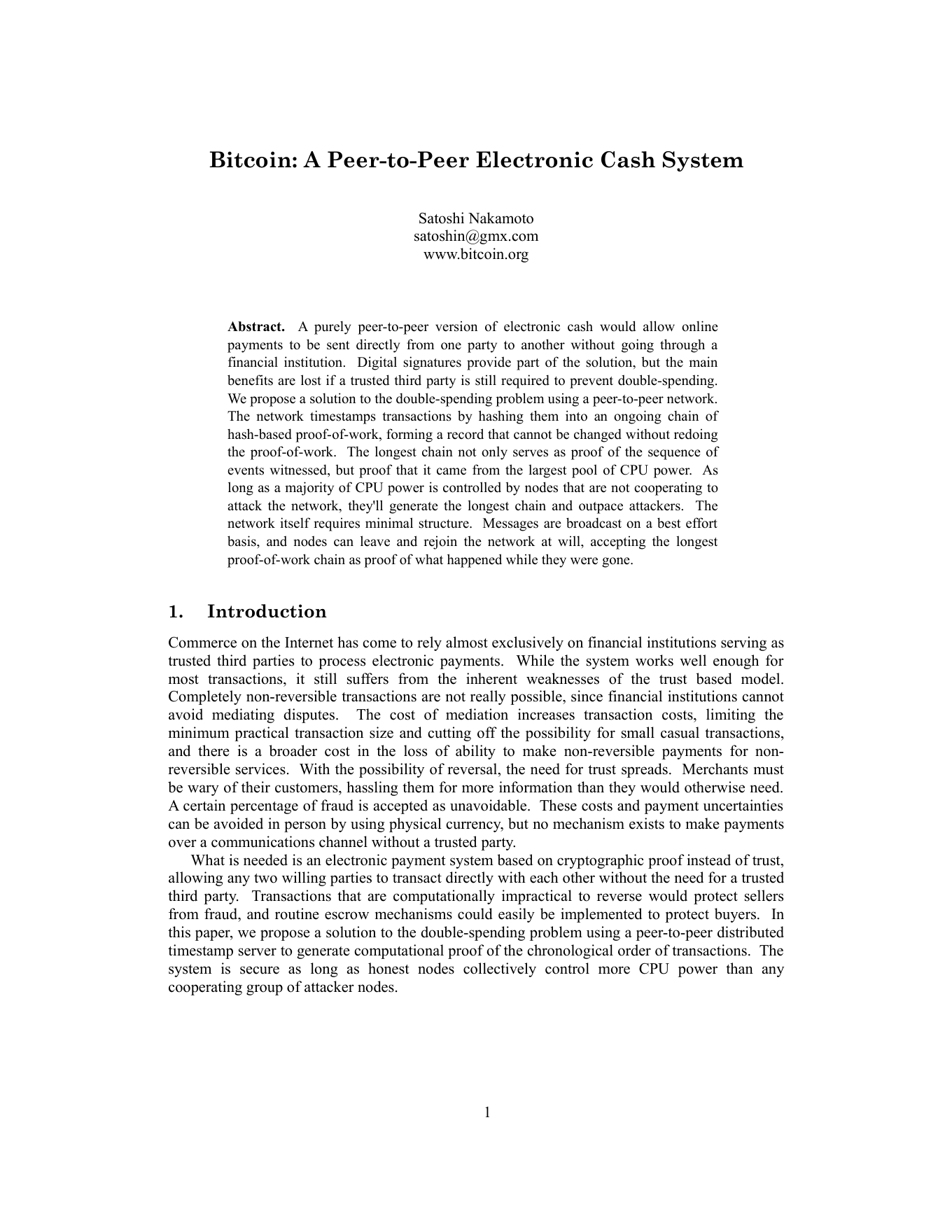
Bitcoin began as a nine-page public paper in October 2008 — anyone can read the original design, no permission needed.
source · accessed 2026-09-05
That open community has always worked in public. Satoshi founded the Bitcointalk forum in 2009, and its Bitcoin boards still host development and technical discussion that anyone can read without an account.
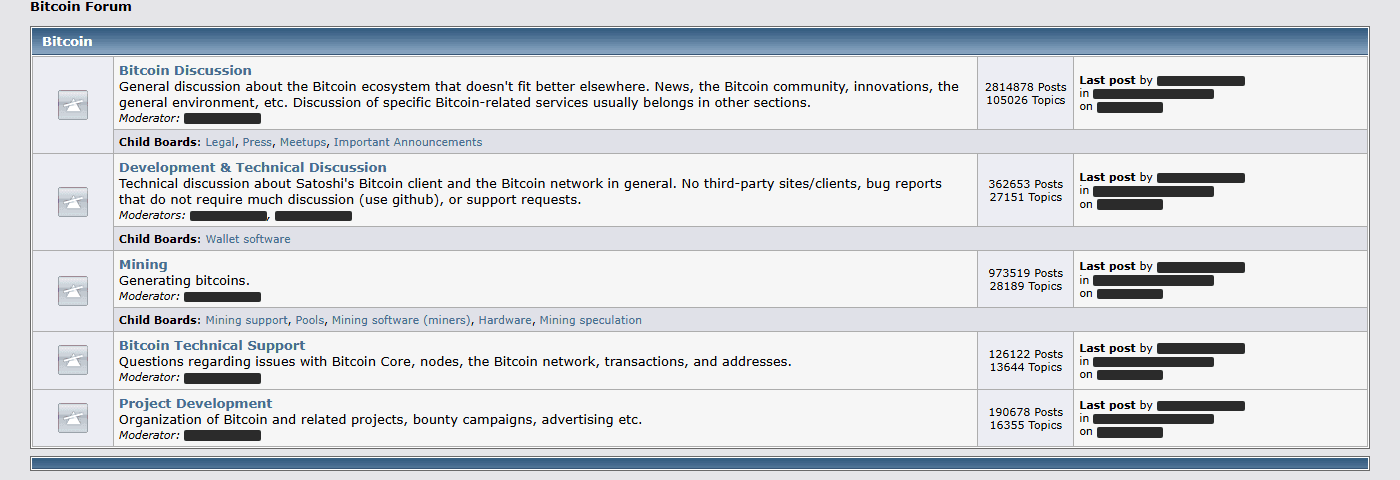
Bitcointalk's public boards, founded by Satoshi in 2009, are still where much of Bitcoin's open discussion happens — no account needed to read.
source · accessed 2026-09-05 · 'Last post' usernames redacted with flattened bars
Nobody owns Bitcoin. That's the feature.