How Transactions Work
Most newcomers think a Bitcoin wallet has a "balance" — like a bank account number that goes up and down. It doesn't. Your balance is the sum of separate, unspent fragments of past transactions. This model is called UTXO (Unspent Transaction Output), and understanding it explains nearly every quirk of using Bitcoin.
The UTXO model
When you receive Bitcoin, you receive a specific output of someone else's transaction. That output is "unspent" until you reference it as an input in your own outgoing transaction.
A transaction always:
- Consumes one or more existing UTXOs (inputs)
- Creates one or more new UTXOs (outputs)
- Pays a fee (input total − output total)
Inputs are spent in full. If you have a 1 BTC UTXO and want to send 0.3 BTC, the transaction creates two outputs:
- 0.3 BTC to the recipient
- ~0.69999 BTC back to you (change)
- ~0.00001 BTC to the miner (fee)
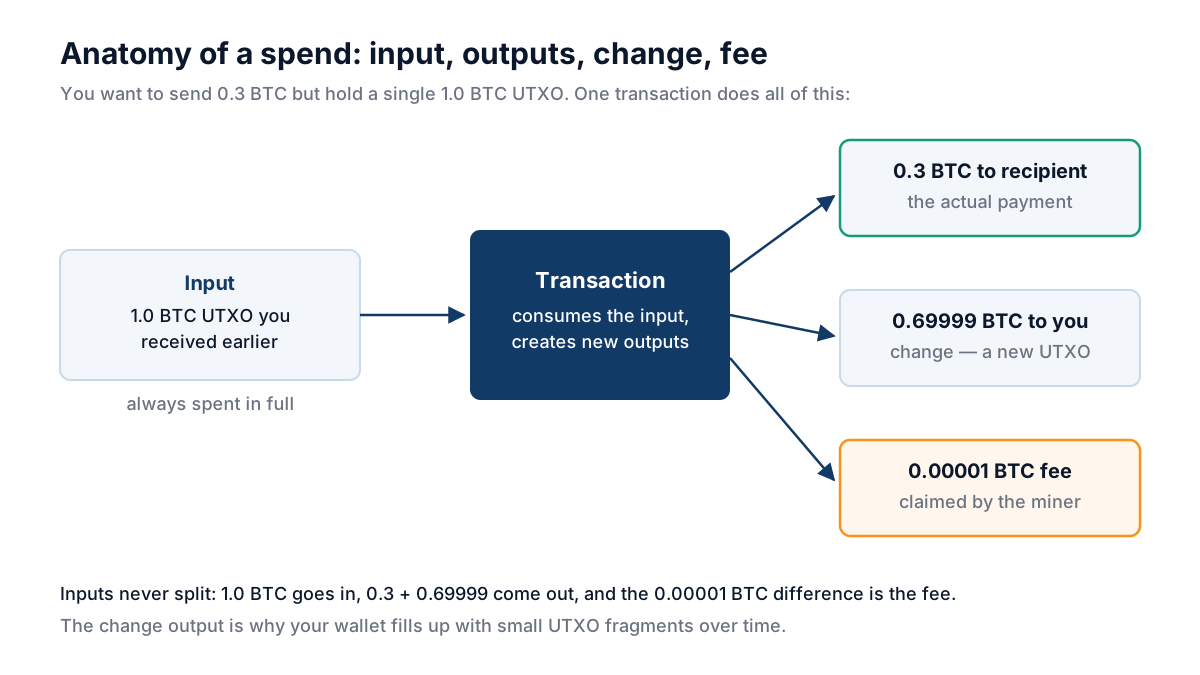
Inputs are spent in full: sending 0.3 BTC from a 1.0 BTC UTXO creates a payment output plus a change output back to you, and the fee is the difference.
Academy original
Why it matters
The UTXO model affects:
- Privacy — every input you combine in one transaction publicly links those addresses
- Fees — transactions with many inputs cost more (each input takes bytes)
- Coin control — advanced wallets let you pick which UTXOs to spend, useful for privacy + cost
Confirmations
After you broadcast a transaction:
- It sits in the mempool (unconfirmed pool) until a miner includes it in a block
- One confirmation = included in the latest block
- Six confirmations = the conventional threshold for treating a payment as settled (~1 hour)
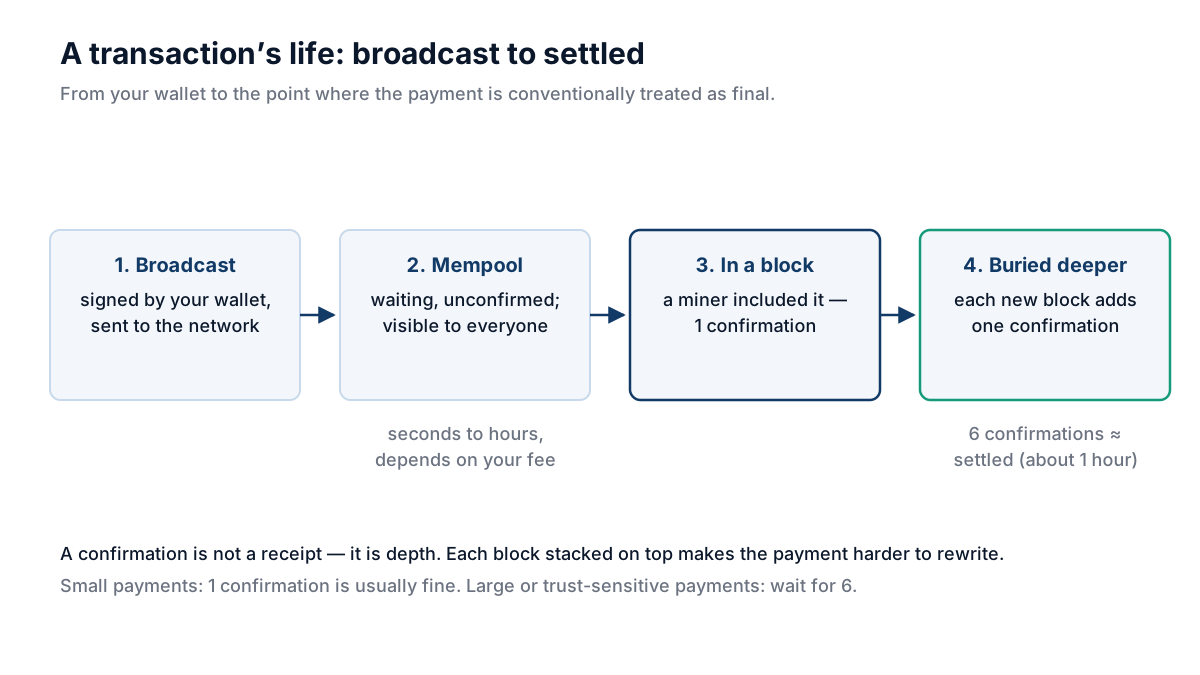
A transaction is not settled when sent: it waits in the mempool until a miner includes it, and each later block adds one confirmation.
Academy original
For small amounts, 1 confirmation is usually fine. For high-value or counterparty trust scenarios, 6 is the convention.
Confirmations are not a guarantee of irreversibility. Each one makes rewriting the block more expensive; none makes it impossible.
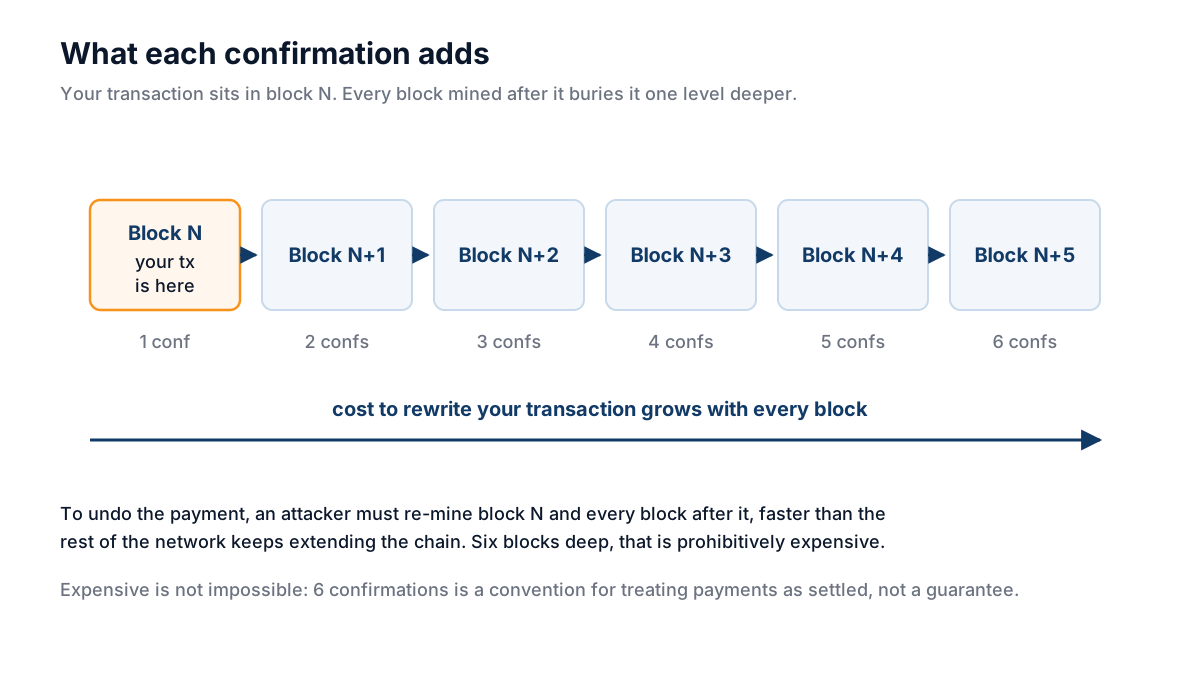
Each confirmation is one more block an attacker must re-mine to undo your payment — depth buys security, but no depth makes reversal impossible.
Academy original
Fees and the mempool
Fees are priced per byte (technically vbyte), not per BTC value. A transaction that moves 100 BTC can have the same fee as one that moves 0.001 BTC if they're the same byte size.
When the mempool is busy, you pay more to get into the next block. When it's quiet, even minimum fees confirm quickly.
Check current fee rates at mempool.space before broadcasting big transactions.